
Stress is something everyone experiences. It can happen during school, work, job interviews, or while searching for a new job.
The good news is that there are simple ways to manage stress and feel more in control. Below are five easy stress management techniques you can try today.
Stress Management Techniques Infographic
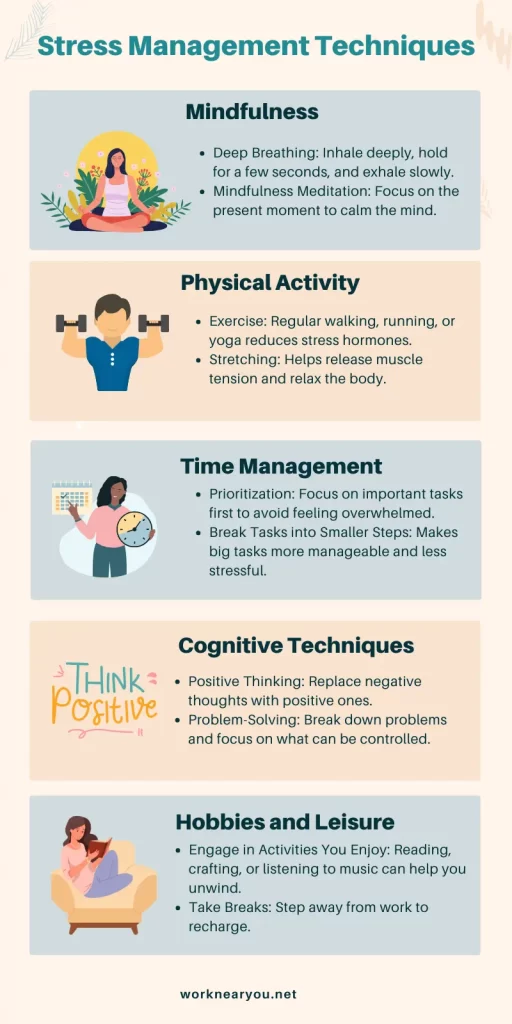
1. Mindfulness: Breathe Deeply and Stay Present
Mindfulness means focusing on the present moment instead of worrying about the past or future.
One simple technique is deep breathing. Slow breathing helps calm your body and mind.
Try this quick exercise:
- Breathe in slowly through your nose for 4 seconds
- Hold your breath for 4 seconds
- Breathe out slowly through your mouth for 4 seconds
Repeat this a few times. Many people use this technique before a job interview or a stressful meeting.
2. Exercise: Move Your Body to Release Tension
Exercise is one of the best ways to reduce stress. When you move your body, your brain releases chemicals that improve your mood.
You do not need an intense workout. Simple activities can help, such as:
- Going for a short walk
- Stretching
- Riding a bike
- Doing a quick home workout
Even 10–15 minutes of movement can help clear your mind and reduce tension.
3. Time Management: Prioritize Tasks and Break Them Down
Feeling overwhelmed often happens when we have too many tasks at once.
A simple solution is to break large tasks into smaller steps.
For example, instead of thinking:
“I need to prepare for my interview.”
Break it down like this:
- Research the company
- Practice interview questions
- Choose an interview outfit
Completing small tasks one at a time makes big goals feel easier.
4. Positive Thinking: Replace Negative Thoughts
Negative thoughts can increase stress. Learning to replace them with positive ones can make a big difference.
For example:
❌ “I’m going to fail this interview.”
✅ “I prepared well and will do my best.”
Positive thinking does not mean ignoring problems. It simply helps you focus on solutions instead of fears.
5. Hobbies: Relax with Activities You Enjoy
Taking time for hobbies is an important part of managing stress.
Doing activities you enjoy gives your brain a break and improves your mood.
Popular stress-relieving hobbies include:
- Reading
- Drawing or painting
- Cooking
- Playing music
- Gardening
- Watching movies
Even 30 minutes of a hobby can help you relax and recharge.